🔗 Linux traffic Interception using REDIRECT
🔗 Outline
To Intercept web requests transparently without any kind of client configuration. When web traffic is reaching the machine squid is run on.
NAT configuration will only work when used on the squid box. This is required to perform intercept accurately and securely. To intercept from a gateway machine and direct traffic at a separate squid box use policy routing.
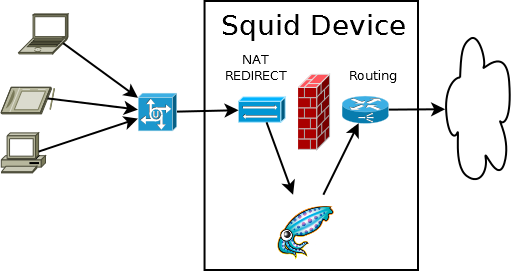
🔗 iptables configuration
Replace SQUIDIP with the public IP which squid may use for its listening port and outbound connections. Replace SQUIDPORT with the port in squid.conf set with intercept flag.
Due to the NAT security vulnerabilities it is also a very good idea to block external access to the internal receiving port. This has to be done in the mangle part of iptables before NAT happens so that intercepted traffic does not get dropped.
Without the first iptables line here being first, your setup may encounter problems with forwarding loops.
# your proxy IP
SQUIDIP=192.168.0.2

# your proxy listening port
SQUIDPORT=3129


iptables -t nat -A PREROUTING -s $SQUIDIP -p tcp --dport 80 -j ACCEPT
iptables -t nat -A PREROUTING -p tcp --dport 80 -j REDIRECT --to-port $SQUIDPORT
iptables -t nat -A POSTROUTING -j MASQUERADE
iptables -t mangle -A PREROUTING -p tcp --dport $SQUIDPORT -j DROP
🔗 Squid Configuration File
You will need to configure squid to know the IP is being intercepted like so:
http_port 3129 transparent
In Squid 3.1+ the transparent option has been split. Use ‘intercept to catch REDIRECT packets.
http_port 3129 intercept
⚠️ Disclaimer: Any example presented here is provided "as-is" with no support
or guarantee of suitability. If you have any further questions about
these examples please email the squid-users mailing list.
Categories: ConfigExample
Navigation: Site Search, Site Pages, Categories, 🔼 go up